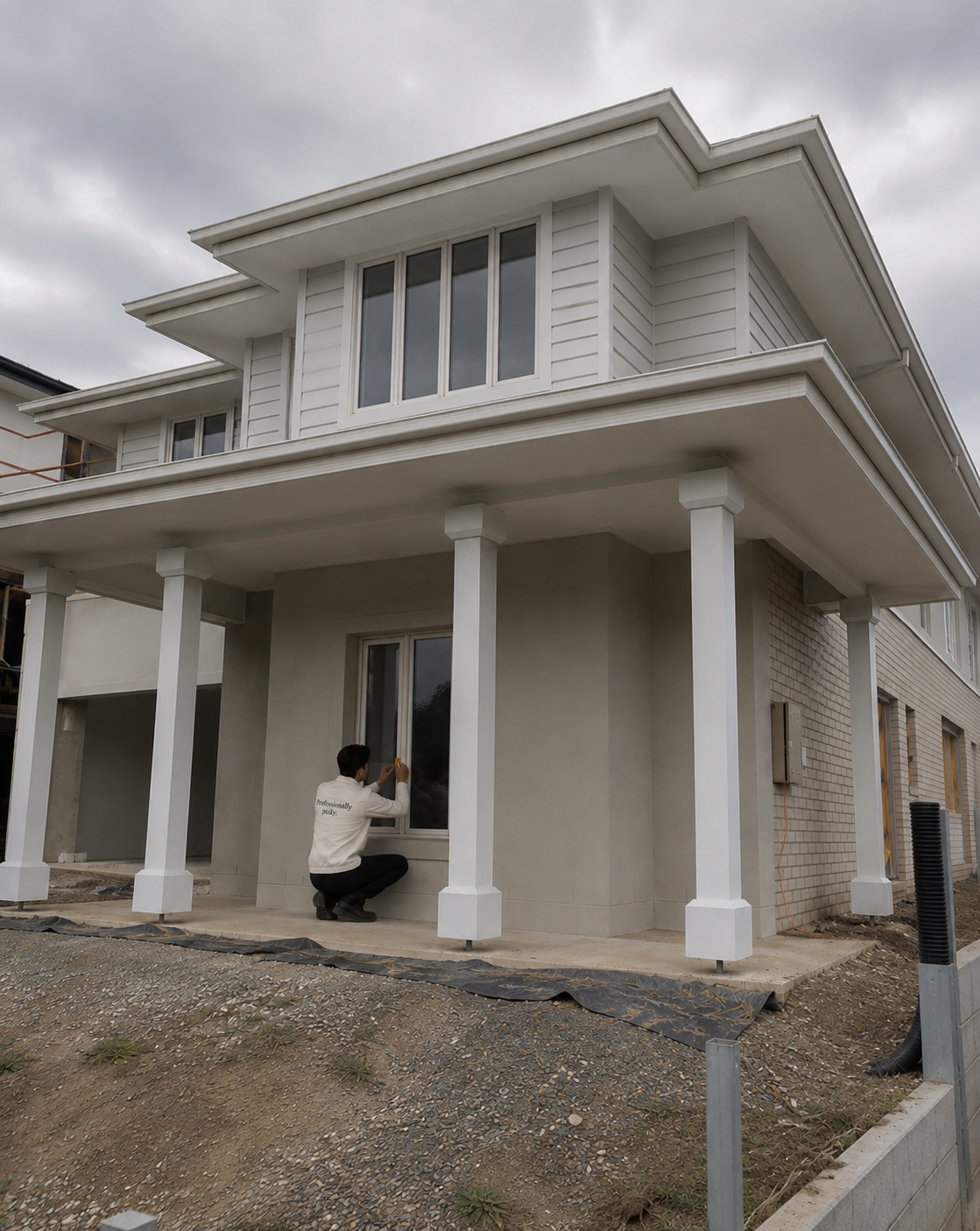
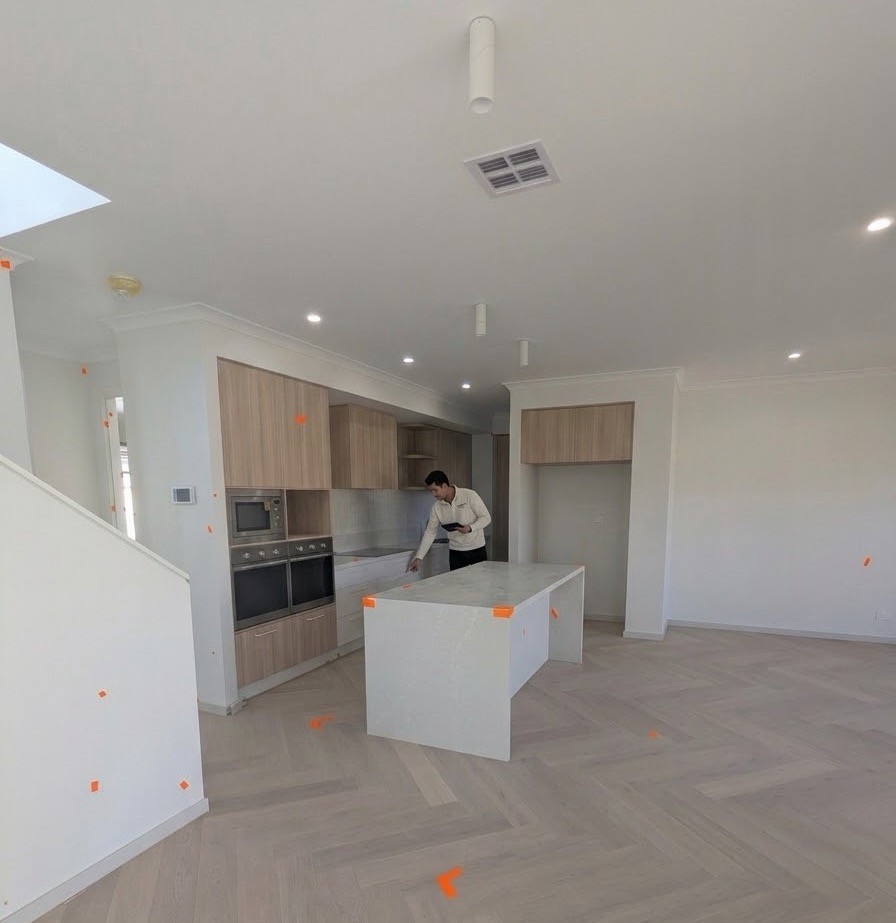
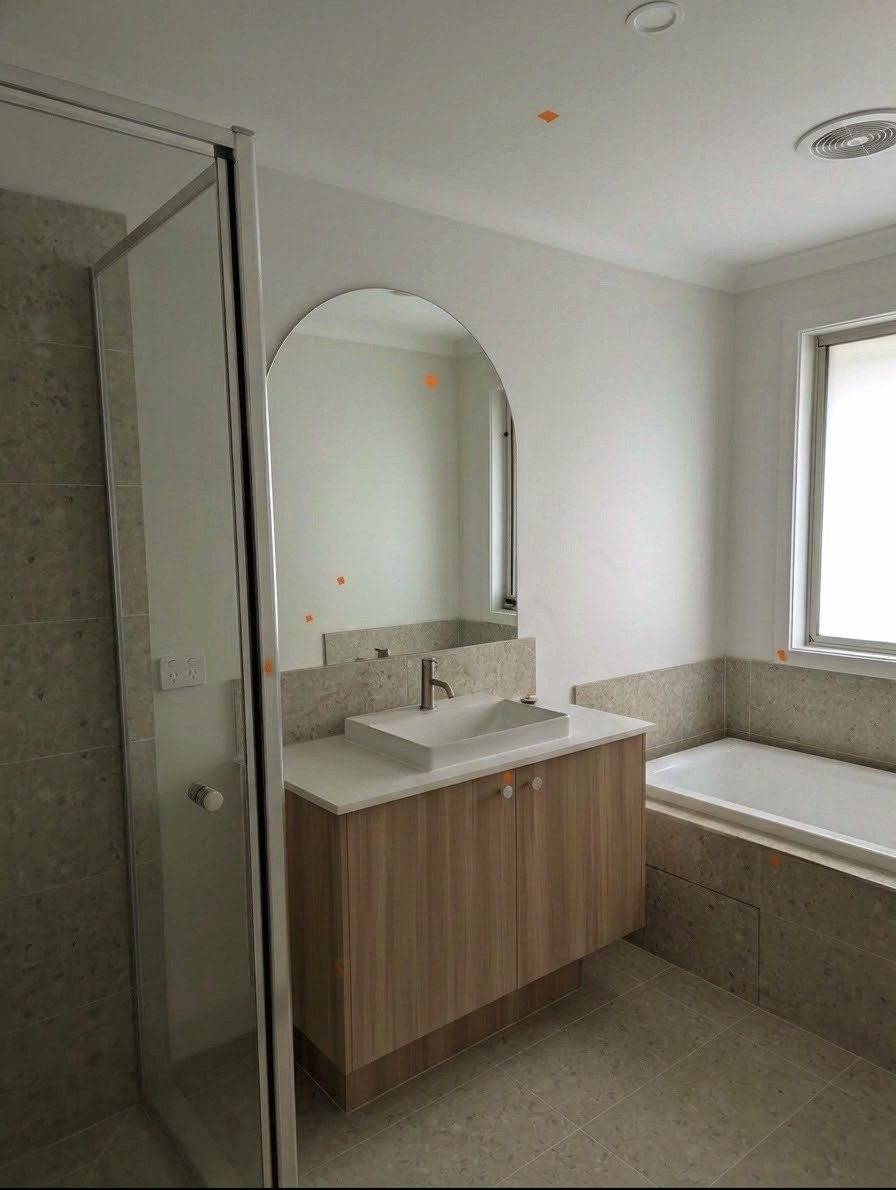
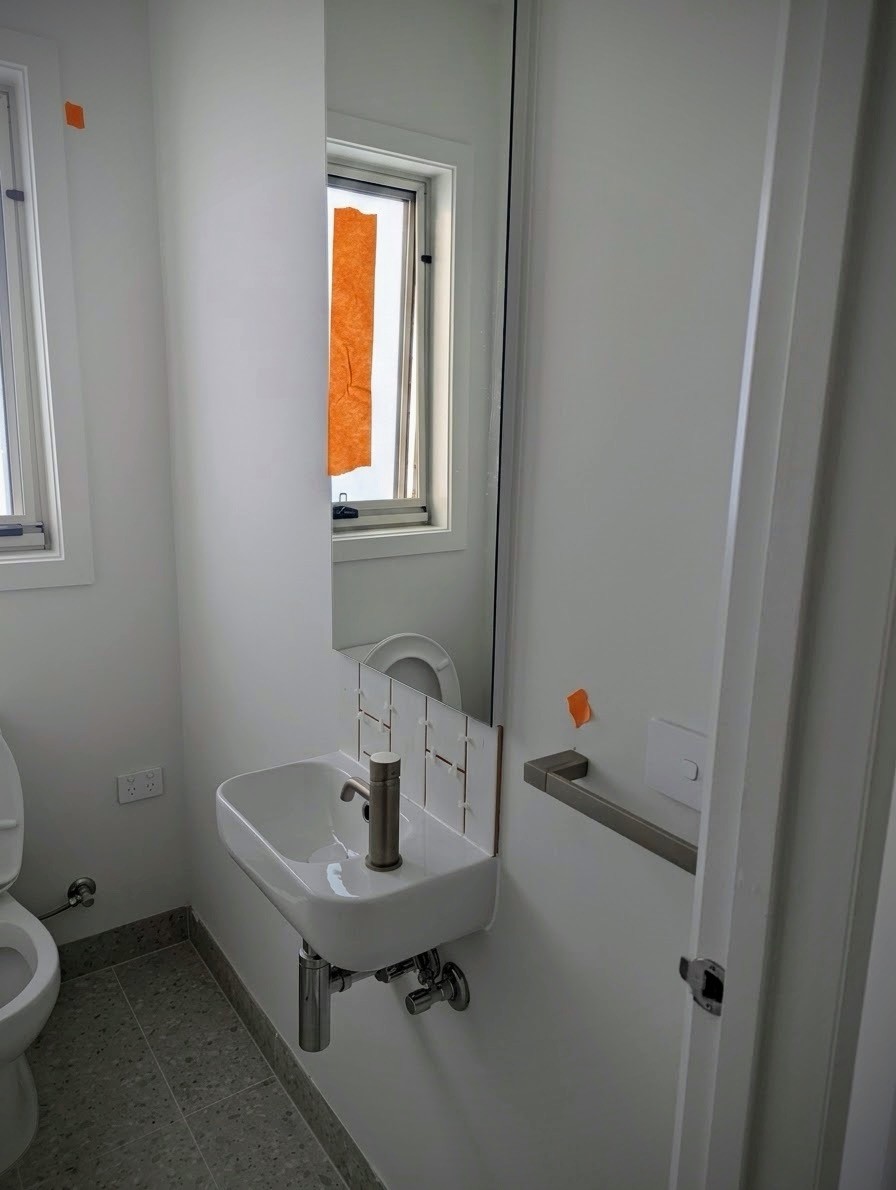
Defects in this report are referenced by clause number to the documents below. Nitpik paraphrases the relevant requirement in each defect entry; refer to the source document for the full text and tolerance. Sources: Guide to Standards and Tolerances, published by the Building and Plumbing Commission (BPC), in the edition shown on this report (2026; the 2026 edition was published on 14 July 2026; advisory only), and Australian Standards referenced for context (available from Standards Australia).
Reference
Title
Scope of application
Guide 2026 — Part B
Inspecting surfaces from a normal viewing position
How every cosmetic finding in this report is assessed
Guide 2026 — Cl. 16.2
Surface finish of paintwork
Runs, sags, wrinkling, dust, starved or bare areas, brush and sanding marks, gloss variation, over-painting of trims
Guide 2026 — Cl. 16.3
Nail and screw fixings in painted surfaces
Visible fixings and unfilled depressions in painted or stained work
Guide 2026 — Cl. 16.4
Mechanical imperfections and damage
Knocks, dents, holes, gouges and unfilled depressions; timber gum pockets, splits, sap bleed
Guide 2026 — Cl. 16.1 / AS/NZS 2311
Standard of painting
Coating system, preparation, number of coats, durability
Guide 2026 — Cl. 12.1.1
Plumbness and straightness of wall surfaces
Bows, hollows and humps in finished internal and external walls
Guide 2026 — Cl. 12.2.3 / AS/NZS 2589
Level of finish for plasterboard
Plasterboard set and finish quality
Guide 2026 — Cl. 12.2.8
Flush joints in plasterboard
Peaking, ridging and visible jointing / tape lines
Guide 2026 — Cl. 12.2.9
Nail popping or screws showing in sheeting
Fixings showing through wall and ceiling linings
Guide 2026 — Cl. 12.2.4
Cracks in plasterboard, hard plaster and bulkheads
Cracks in walls, ceilings, joints and bulkheads
Guide 2026 — Cl. 12.2.5
Cracks in cornices
Cornice butt joints, internal and external mitres, wall and ceiling junctions
Guide 2026 — Cl. 12.2.7
Straightness and alignment of plaster cornices
Wavy, dropped or misaligned cornice runs
Guide 2026 — Cl. 12.2.10
Straightness of plasterboard ceilings
Sagging, dishing or stepped ceiling planes
Guide 2026 — Cl. 12.2.6
Cracking at junctions of dissimilar materials
Cracks where plaster meets timber, masonry or other materials
Guide 2026 — Cl. 13.1
Gaps in internal fixing
Skirtings, architraves and mouldings — mitres, butt joints and junctions with walls
Guide 2026 — Cl. 13.2
Joints in fixing of internal mouldings
Stepped or misaligned architrave and skirting joints
Guide 2026 — Cl. 13.3
Architrave quirks
Setback of the architrave from the door or window reveal edge
Guide 2026 — Cl. 13.4
Benchtops, cabinet doors and drawer fronts
Joinery alignment and reveal gaps
Guide 2026 — Cl. 13.8
Joints in timber, stone and laminated benchtops
Benchtop and vertical panel joints
Guide 2026 — Cl. 13.9
Sealing around benches and caulking finish
Silicone and caulking at benchtops, sinks, basins and splashbacks
Guide 2026 — Cl. 14.4
Grouting and joints
Grout finish, joint width and alignment, wet-area junction sealants
Guide 2026 — Cl. 14.5
Uneven tiling
Flatness of a finished tiled surface
Guide 2026 — Cl. 14.6 (Table 14.6)
Lippage (stepping) between tiles
Step between adjacent tile edges
Guide 2026 — Cl. 14.3
Cracked, pitted, chipped, scratched or loose tiles
Damaged tiles at handover
Guide 2026 — Cl. 14.2 / AS 3958
Floor and wall tiling generally
Tiling workmanship and materials; repairs and non-matching tiles
Guide 2026 — Cl. 11.4
Internal door clearances
Gaps between door leaves, frames and floor finishes
Guide 2026 — Cl. 11.5 (Table 11.5)
Distortion of doors
Twist, bow and squareness of door leaves
Guide 2026 — Cl. 11.6 / 11.7
Sealing of door edges and operation
Unpainted door edges; binding, jamming and latching
Guide 2026 — Cl. 11.9
Glazing and mirrors
Scratches, chips and surface blemishes in glass
Guide 2026 — Cl. 11.1
Installation of external windows and doors
Plumb and level of window and door frames and jambs
Guide 2026 — Cl. 15.2 / 15.3
Timber and floating floor lippage and gaps
Board-to-board steps and gapping
Guide 2026 — Cl. 15.9
Carpet, vinyl and floating floors
Joins, peaking, fraying and misalignment
Guide 2026 — Cl. 12.3.2
Cracks and blemishes in rendered surfaces
External render on masonry
Guide 2026 — Cl. 5.11
Cleaning, mortar smears and stains to masonry
Face brickwork appearance at handover
Standard
Title
What it governs
AS/NZS 2311
Guide to the painting of buildings
Sets how paint systems are prepared and applied — surface preparation, number of coats, film build and suitability for the exposure. Cited when paintwork is thin, patchy or the wrong system for the location.
AS/NZS 2589
Gypsum linings — application and finishing
Defines the plasterboard finish levels. Level 4 is the normal standard for painted internal walls in a new home. Cited for jointing, flushing, fastener and surface-finish defects.
AS 3958
Ceramic tiles — installation and guide to selection
Sets tiling workmanship: bed and adhesive coverage, movement joints, and the allowable lippage (height difference) between adjacent tiles for a given tile size and edge finish.
AS 2688
Timber and composite doors
Covers door leaf construction, flatness and finishing. Cited for bowed, twisted or poorly finished door leaves.
AS 3740
Waterproofing of domestic wet areas
Sets the wet-area waterproofing requirements. Nitpik cites it only for visible finish issues at wet-area junctions — the membrane itself is concealed and outside our scope.