Nitpik — Guide
Pre-handover inspection Melbourne: what to check before you sign off.
You're about to accept a home you've paid a lot for. This guide covers when to book an inspection, the finish defects we find most often in high-end Melbourne homes, and the tolerances builders have to meet under the 2026 Victorian Guide.
When to book
Book as soon as your builder gives you a practical completion date. Aim for the inspection before you sign the handover documents or pay the final instalment. Until then, fixing defects is clearly the builder's job.
Leave two to three hours for the walkthrough. Power and lights should be on, and the home should have had its builder's clean. Dust and protective film hide defects.
How finishes are judged
The Guide doesn't judge surfaces with your nose against the wall or a torch at a low angle. A cosmetic defect counts when it can be seen from the normal viewing position: 1.5 m or greater for walls, ceilings and floors; 600 mm for appliances and fixtures; 3 m for glass — with the surface lit by non-critical (diffuse, non-glancing) light. We use raking light to find marks, then check each one from that position before it goes in the report. That way the builder can't argue with it.
The defects we find most, and the tolerances that apply
The photos are from real homes we've inspected. Clause numbers refer to the Guide to Standards and Tolerances 2026.
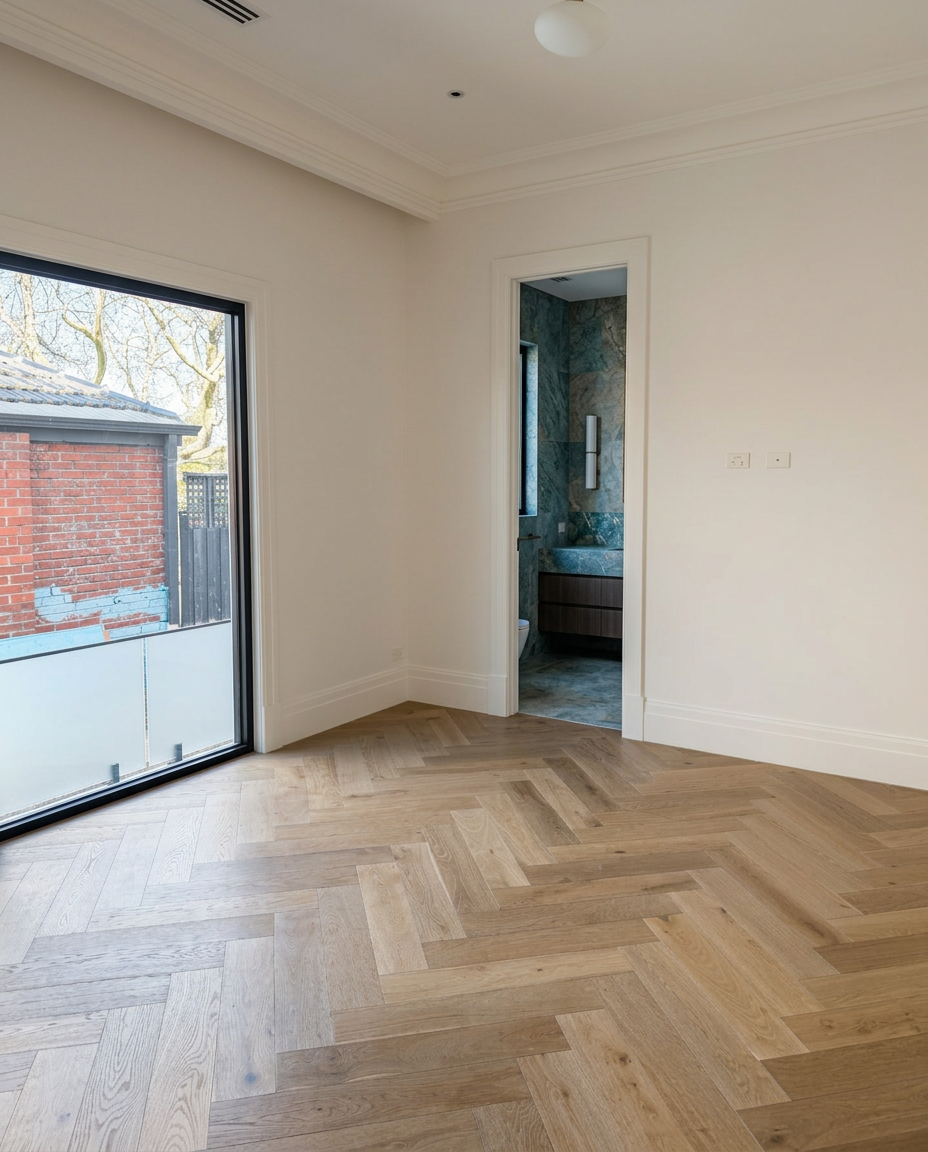
Cl. 16.2
Paintwork
What we look for: Runs, sags, brush marks, dust in the coat, patchy sheen and paint on skirtings, architraves or glass.
Tolerance: A defect if the blemish is visible from a normal viewing position (1.5 m, diffuse light).
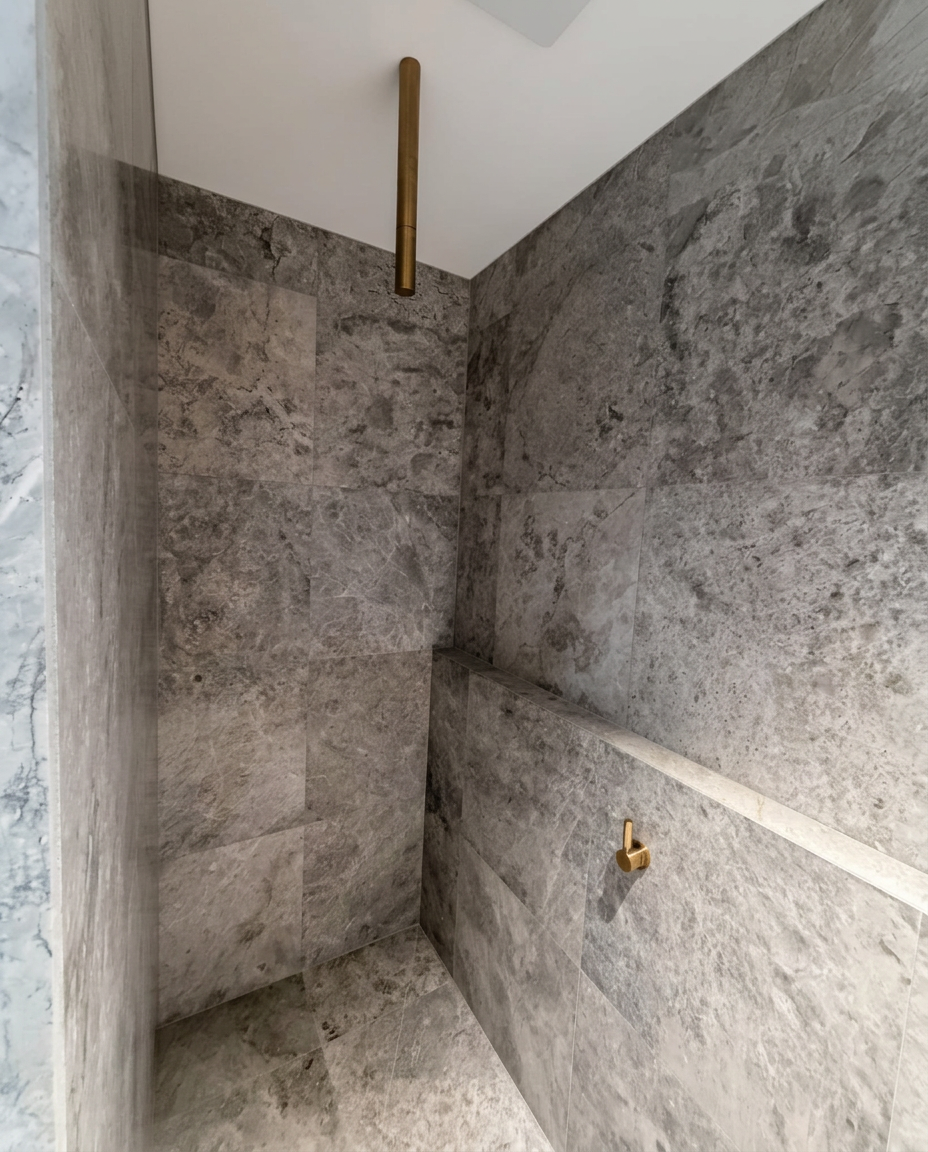
Cl. 14.4 / 14.6 / 14.3
Tiling & grout
What we look for: Lipping between tiles, wandering joints, pinholes or voids in grout, chipped edges and messy silicone.
Tolerance: Joints within ±4 mm in 2 m. Lipping on flat polished or honed tiles up to 1.0–2.0 mm depending on joint width. No tile cracked, chipped or scratched at completion.

Cl. 13.4 / 13.8 / 13.9
Stone & joinery
What we look for: Uneven gaps between cabinet doors and drawers, poorly filled stone joints and lumpy caulking at benchtops.
Tolerance: Doors and drawer fronts aligned with consistent gaps. Joints tight, level and sealed in a matching colour. Caulking smooth and even.
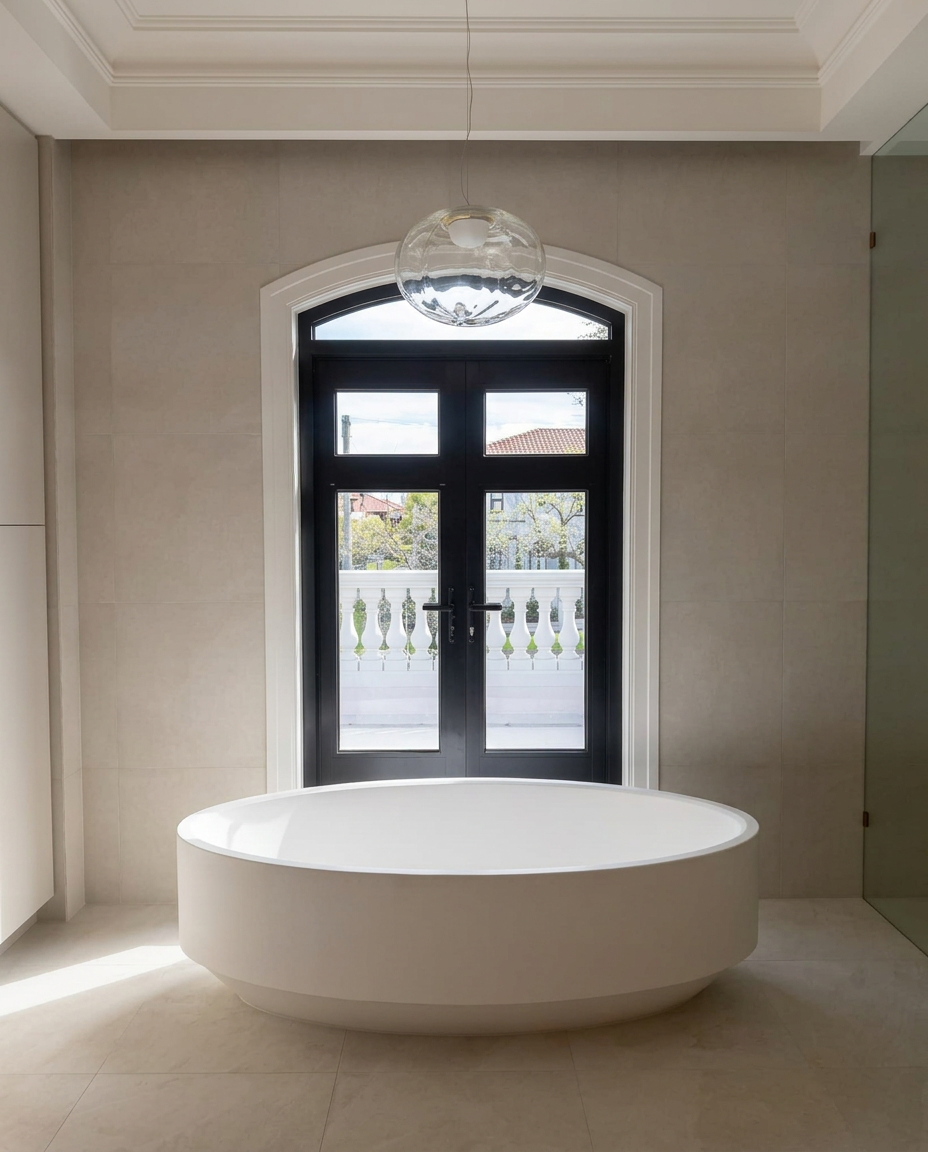
Cl. 12.2.8 / 12.2.7 / 11.9
Plaster, ceilings & glass
What we look for: Visible plaster joints, wavy cornices, cracks, and scratches on windows or shower glass.
Tolerance: No joint visible from 1.5 m. Cornice within 4 mm under a 2 m straight edge. Glass is judged from 3 m: marks up to 10 mm long, at most three per pane, are acceptable.
Getting defects fixed
- Send the builder the report before handover, and ask for a date by which everything will be fixed.
- Point to the photo, room and clause for each item. That removes most of the back-and-forth.
- Once the work is done, book the re-check. We mark each original item Rectified or Outstanding.
- Only sign off once you're happy, or once outstanding items are agreed in writing.
Common questions
When should I book a pre-handover inspection?
Once the builder tells you the home has reached practical completion, and before you sign off or pay the final instalment. That's when you have the most leverage to get defects fixed.
Is a pre-handover inspection the same as a practical completion inspection?
Yes, mostly. People call it both. It's the final walkthrough before you accept the keys, where you list everything the builder still needs to fix.
What standard do defects get measured against?
In Victoria the reference is the Guide to Standards and Tolerances 2026, published by the Building and Plumbing Commission (Victoria). Your contract and the law take precedence, but the Guide sets out the tolerances builders and inspectors work to.
Can I inspect the home after handover?
Yes, but it's harder. Once you've accepted the home, it can be difficult to show a scratch or chip was already there. It's far easier to get defects fixed if they're documented before you sign off.
What does Nitpik check, and what does it cost?
We inspect the cosmetic finish only: paint, plaster, tiling, joinery, stone, doors and glass. Every defect is photographed and cited to the 2026 Guide. Flat rates are $450 for a single-storey home and $750 for a double-storey. Re-check visits after rectification are quoted individually.
Book your pre-handover inspection
$450 single-storey · $750 double-storey. A photographed report cited to the 2026 Guide, delivered the same day. Servicing Victoria.
This guide is general information about cosmetic finish defects only. It isn't legal advice or a structural or compliance assessment. Your contract and the law take precedence over the Guide.